
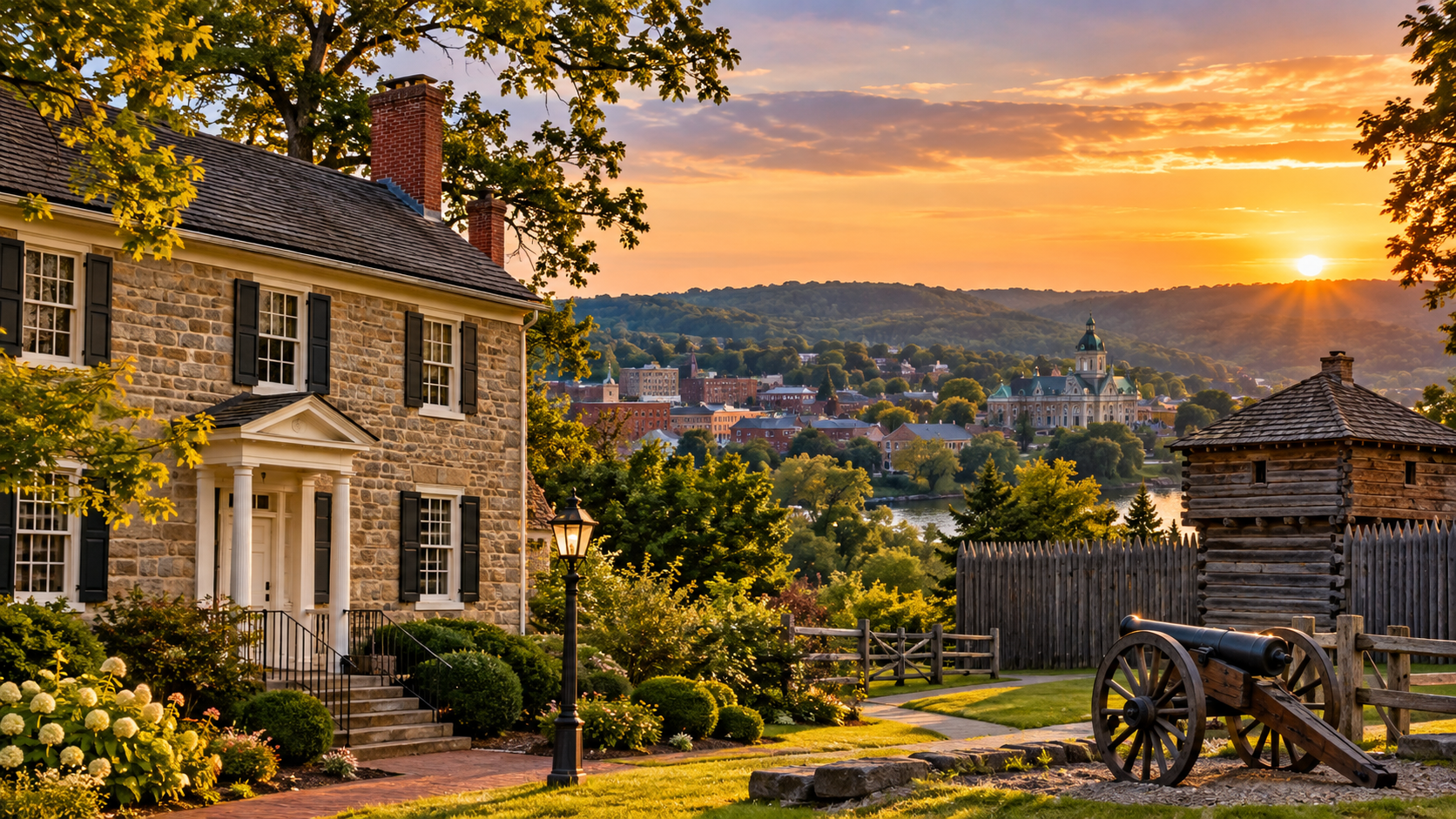
Washington PA History is not confined to a textbook or a display case. It lives in stone houses, family records, downtown streets, frontier sites, old photographs, community traditions, and stories passed from one generation to another. For Washington County residents and businesses, however, finding reliable information—and understanding why a local story matters—can sometimes be difficult.
That is where the Washington County Historical Society plays an essential role. Through historic tours, educational outreach, research services, preservation work, and public events, the Society connects people with the places and experiences that shaped Washington, PA history and the surrounding county. Exploring that history can deepen local knowledge, strengthen community identity, and help preserve irreplaceable resources for future generations. Donate Today!
Let’s dive in…
Key Takeaways
- Washington PA History becomes more meaningful when you experience historic places firsthand.
- Guided tours connect local landmarks with the people and events behind them.
- Research resources can uncover family, property, business, and community stories.
- Educational outreach brings Washington County history directly to schools, senior centers, and organizations.
- Local events turn historical learning into a shared community experience.
- Preservation protects buildings, documents, photographs, artifacts, and stories from permanent loss.
- Residents and businesses can participate through visits, research, events, membership, volunteering, and financial support.
Why Washington PA History Matters to the Community
Local history gives context to the places people pass every day. A familiar street, cemetery, house, farm, or public building can take on a different meaning once its story is understood. Washington County’s past includes frontier settlement, agriculture, the Whiskey Rebellion, abolitionism, westward migration, industry, energy development, and generations of everyday community life.
The Washington County Historical Society works to make those connections accessible. Its mission centers on preservation, research, and education while encouraging discovery and sharing of Washington County’s history.
That work matters beyond historical curiosity. Students gain a stronger sense of place when national events are connected to their own community. Families can discover how ancestors participated in the region’s development. Businesses can better understand the heritage of the communities they serve. Residents gain opportunities to see familiar surroundings through a deeper historical lens.
Preserving local history also protects evidence. Buildings can be altered. Documents deteriorate. Photographs lose their identities when names and dates disappear. Historical organizations help prevent those losses while creating opportunities for the public to learn from original places and materials.
Experience Local History Through Tours and Historic Sites
Some stories make far more sense when you stand where they happened. The Society’s tours and historic properties offer residents, students, groups, and visitors opportunities to experience history beyond written summaries.
- Visit the LeMoyne House. The 1812 stone house in downtown Washington provides a setting for exploring the LeMoyne family, abolitionism, social reform, and the Underground Railroad.
- Explore the LeMoyne Crematory. The historic site adds another dimension to Dr. Francis Julius LeMoyne’s life and reform-minded work. The first cremation there occurred in 1876.
- Discover frontier life. The Frontier History Center in Washington Park was created to help visitors understand 18th-century life in Western Pennsylvania and includes a stockade, blockhouse, cabins, camp, and blacksmith shop.
- Look beyond buildings. Cemetery, fort, Underground Railroad, Braddock’s Road, and Whiskey Rebellion programming connects individual sites with broader regional history.
For families and educators, these experiences can turn an abstract date into something tangible. For longtime residents, they can reveal unexpected stories hiding in familiar places.
Research Washington County Families, Places, and Records
History often becomes personal when someone starts with a name, address, photograph, or family story. The Norma K. Grimes Research Library gives researchers a place to pursue those questions with materials connected specifically to Washington County.
The Washington County Historical Society provides access to resources that include deeds and wills, Orphans’ Court records dating to the county’s early years, newspapers, archival collections, photographs, and name indexes. Research assistance, image reproduction, index searches, and consultations are also available.
That makes the library useful for more than genealogy. A homeowner might investigate a historic property. A business may want to understand the history of a building or commercial district. Students can develop projects using local primary sources. Writers and historians can pursue details that broad internet searches simply cannot supply.
The key is to begin with what you know. Gather names, approximate dates, addresses, family documents, photographs, and previous research before making a request. Even a small clue can narrow a search considerably.
Support Local History with Your Gift!
Bringing Washington PA History Into the Community
Not everyone can begin their historical journey inside a museum or research library. Outreach allows local history to travel into the community instead.
The Society’s educational programming includes presentations for Washington County schools, senior centers, and organizations. Topics connect audiences with subjects such as Braddock’s Road, the Whiskey Rebellion, the Underground Railroad, and regional history.
Organizations interested in making history more accessible can:
- Schedule educational outreach for students, civic organizations, senior groups, or community audiences.
- Connect lessons to local places so participants recognize that major historical themes unfolded close to home.
- Use programs as starting points for classroom projects, family research, or visits to historic sites.
- Invite multiple generations to participate because residents often carry memories and knowledge that complement archival records.
- Follow programs with research using the Society’s collections to explore a topic in greater depth.
This combination of storytelling and evidence helps history remain relevant. It also creates opportunities for residents to contribute knowledge rather than simply receive it.
Events Create New Ways to Participate in Local Heritage
Historical preservation succeeds when people actually engage with the history being protected. Community events offer a social, approachable entry point for people who might not initially think of themselves as history enthusiasts.
The Washington County Historical Society uses public programming to connect regional heritage with contemporary community life. Its events have included the Running of the Wools, Hall of Fame celebrations, exhibitions, seasonal programming, and other gatherings. Running of the Wools, for example, highlights Washington County’s historic relationship with agriculture, sheep, and the wool industry while bringing activity into downtown Washington.
For local businesses, events can create another reason to engage with heritage. Businesses can participate as community partners, sponsors, attendees, or advocates for preservation. Residents can attend with family and friends, learn something unexpected, and discover other Society programs along the way.
The result is a broader understanding of what a historical society can be. It is not simply a repository for the past. It can also be a gathering place where the community interprets, discusses, and celebrates its shared history.
Preservation Keeps Washington County’s Story Available
Preservation happens on several levels, and each one matters. A historic structure needs physical care. Archival documents require appropriate storage and organization. Photographs need identification and protection. Artifacts require responsible stewardship. Just as importantly, historical knowledge must be researched and shared if it is going to remain useful.
Residents and businesses can contribute to that work in practical ways:
- Preserve family materials carefully. Record names, dates, locations, and context while that information is still known.
- Research before discarding. Old photographs, letters, business records, maps, and documents may contain valuable local information.
- Visit historic properties. Public interest demonstrates that preserved places continue to serve the community.
- Participate in programs. Tours, outreach, research, and events keep historical knowledge circulating.
- Support preservation financially. Donations help nonprofit organizations care for collections, properties, educational initiatives, and public programs.
- Share local knowledge. Family stories and community memories can provide leads for deeper documentary research.
Through its historic properties, research collections, educational work, and public programming, the Washington County Historical Society gives Washington, PA a structured way to protect local heritage while continuing to learn from it.

Frequently Asked Questions
Q: What is the best way to start exploring Washington PA History?
A: Begin with a guided tour, public event, or visit to the research library. Choose based on whether you’re most interested in historic places, community stories, or family and property research.
Q: How much does historical research in Washington, PA cost?
A: Fees vary by service. The Society currently lists research-library admission and separate rates for research services, consultations, and reproductions, with certain member discounts and benefits. Check the Society’s website for current pricing before visiting or submitting a request.
Q: Where can I experience Washington PA History in Washington, PA?
A: Sites associated with the Society include the LeMoyne House, LeMoyne Crematory, Norma K. Grimes Research Library, and Frontier History Center in Washington Park.
Q: Are Washington County history programs accessible to groups that cannot visit a museum?
A: Yes. Educational outreach brings historical presentations to schools, senior centers, and organizations. Contact the Society in advance to discuss your group’s needs, scheduling, and current accessibility requirements.
Q: Can residents participate even if they are not historians?
A: Absolutely. Residents can attend events, take tours, research family history, become members, support preservation, and share documented local knowledge. Historical participation does not require academic training.
Q: How does preserving local history benefit Washington County?
A: Preservation keeps historic places, records, images, artifacts, and community stories available for education and research. It also gives future residents stronger evidence for understanding how Washington County developed.
Q: Can local businesses participate in historical preservation?
A: Yes. Businesses can attend or support events, encourage employees to explore local heritage, pursue company or property research, become involved with community programming, and financially support preservation efforts.
Keeping Washington PA History Within Reach
Washington PA History belongs to the people who live, work, study, and build businesses here, but keeping that history accessible requires active preservation. Through tours, events, outreach, research, and stewardship of historic resources, the Washington County Historical Society helps residents understand what came before while protecting evidence that future generations will need. If you’re ready to be a part of history preservation, start by visiting, researching, participating, or supporting the work that keeps Washington County’s stories available. Be Part of Preserving History — Contribute Now!