
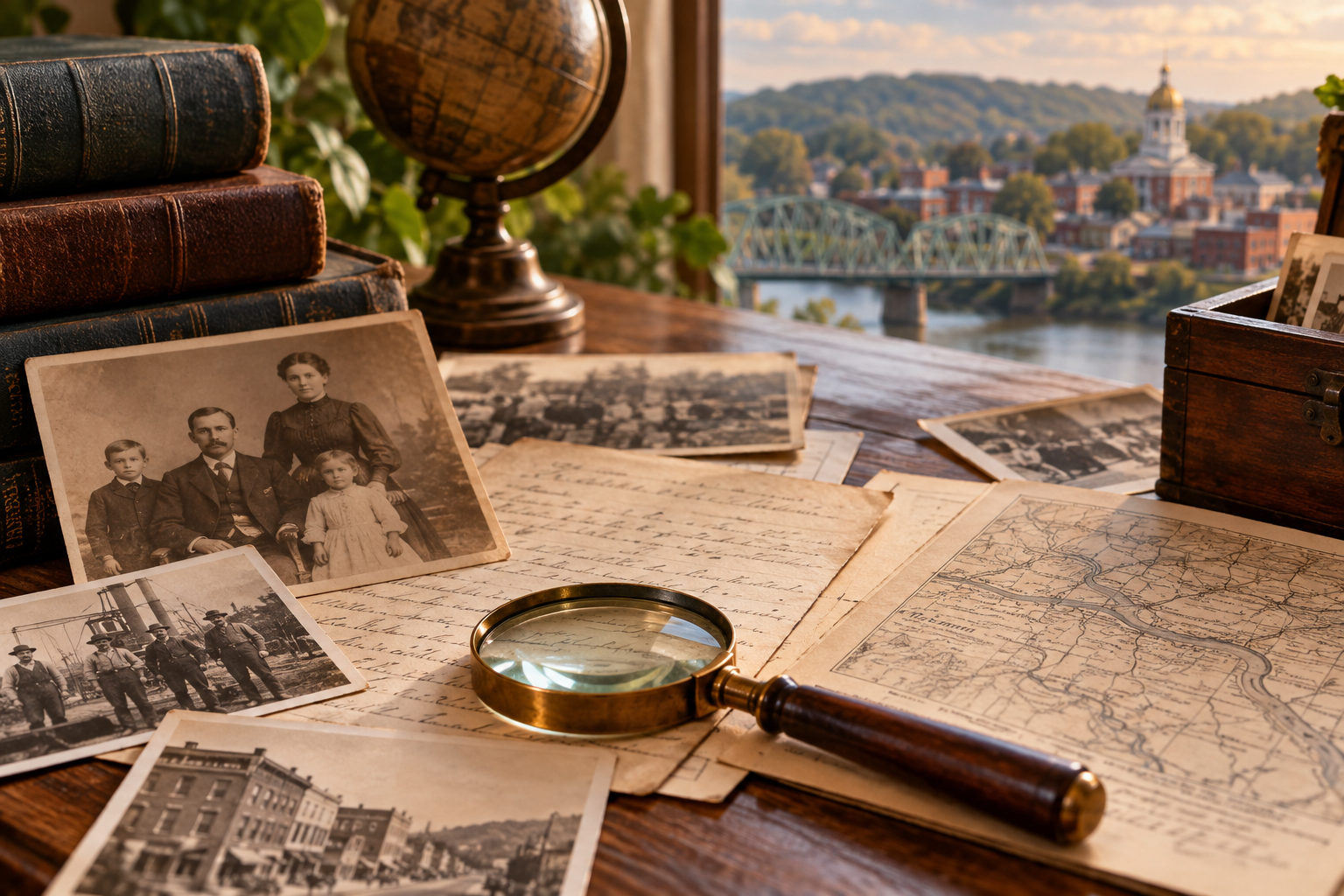
Searching for Family History Washington County PA can begin with a name scribbled on the back of a photograph, an old family story, a cemetery marker, or a record that raises more questions than it answers. For Washington County residents and businesses, uncovering those connections can deepen an understanding of the people, neighborhoods, industries, and events that shaped the region.
Yet genealogy research can quickly become complicated. Names change, records conflict, and online databases rarely tell the whole story. The Washington County Historical Society helps connect researchers with local historical resources and the context needed to interpret them. That work supports education, strengthens community connections, and helps preserve Washington County’s history for future generations. Donate Today!
Let’s dive in…

Key Takeaways
- • Start with confirmed family facts before moving backward through generations.
- • Local records can reveal details that national genealogy databases miss.
- • Cemetery records are valuable clues, but researchers should verify them with additional sources.
- • Historical context helps explain where ancestors lived, worked, worshipped, and built community.
- • Record spelling variations can uncover family members hidden by inconsistent indexing.
- • Washington County resources add local depth to genealogy research.
- • Preserving discoveries today gives future generations a stronger historical record.
Why Family History Washington County PA Research Benefits From Local Sources
Genealogy websites have transformed family research. A few searches can uncover census entries, military records, marriage information, photographs, and family trees assembled by distant relatives. Those discoveries are useful starting points, but family history becomes richer when researchers move beyond names and dates.
Local historical research can reveal the world surrounding an ancestor. Where did the family live in Washington County? What industries employed people in that community? Which churches, schools, organizations, or businesses were part of everyday life? Did transportation routes, economic changes, wars, migration, or industrial development affect the family’s decisions?
Those questions turn genealogy into history.
The Washington County Historical Society plays an important role in connecting researchers with Washington, PA’s historical record. Local collections and knowledgeable research can help people interpret evidence within the county’s broader story. Instead of simply discovering that an ancestor lived here, researchers can begin understanding what that life may have looked like.
Build Your Research From What Your Family Already Knows
Strong genealogy research usually begins at home. Before searching databases, gather information from relatives and materials already in your family’s possession.
- Record names carefully. Include maiden names, nicknames, middle names, and alternate spellings.
- Write down dates and places. Births, marriages, deaths, residences, schools, churches, and workplaces provide research anchors.
- Interview relatives. Ask about people, neighborhoods, occupations, traditions, migrations, and memorable events.
- Examine photographs. Names, studio marks, uniforms, buildings, and handwritten notes can produce useful clues.
- Collect family documents. Letters, obituaries, funeral cards, certificates, deeds, Bibles, and military papers may contain information unavailable elsewhere.
- Separate evidence from family tradition. Family stories matter, but treat them as leads until records support them.
Create a simple research log as you work. Note what you searched, where you searched, what you found, and which questions remain unanswered. This prevents repeated work and makes conflicting evidence easier to spot.
The Washington County Historical Society can become especially valuable once those initial clues point toward people and places in Washington County.
Use Cemetery Records Without Stopping at the Headstone
Cemetery research is often one of the most rewarding parts of genealogy. A grave marker can provide birth and death dates, family relationships, military service, religious symbolism, and clues about other relatives buried nearby.
Online resources such as Find a Grave make cemetery information far easier to discover. Memorial pages may include marker photographs, obituaries, family links, cemetery locations, and contributor notes.
Still, online memorials should generally be treated as evidence to investigate rather than unquestioned proof. User-submitted information can contain mistakes, and gravestones themselves may conflict with official records.
When a cemetery discovery points toward Washington County, compare it with other available evidence. Census records, obituaries, newspapers, probate materials, deeds, church records, directories, military records, and local historical collections can help confirm an identity or reveal additional family connections.
The Washington County Historical Society adds another dimension: local context. A burial record tells you where someone rests. Historical research can help explain the community in which that person lived.
Support Local History with Your Gift!
Look Beyond Vital Records to Reconstruct an Ancestor’s Life
Birth, marriage, and death records create the framework of a family tree, but they rarely capture a complete life. Researchers interested in Washington County genealogy should broaden their search.
Consider these categories:
- Census records: Track households, ages, occupations, property, birthplaces, and migration over time.
- Newspapers and obituaries: Look for relatives, occupations, organizations, addresses, and community relationships.
- Land and property records: Trace ownership while identifying neighbors, relatives, and economic circumstances.
- Probate records: Wills and estate documents can reveal heirs, possessions, debts, and family relationships.
- Church and cemetery records: Baptisms, marriages, burials, and congregational information may fill gaps in civil records.
- Military records: Service files and pension documents can contain personal and family information.
- Directories and local histories: These resources can place ancestors within specific Washington County communities and occupations.
The key is comparison. One record can contain an error; several independent sources pointing toward the same conclusion create a stronger case.
For researchers in Washington, PA, the Washington County Historical Society can help bridge the gap between genealogical data and the local history surrounding it.
How to Handle Conflicting Names, Dates, and Family Stories
Nearly every serious family researcher eventually encounters a contradiction. One document gives 1842 as a birth year; another suggests 1844. A surname appears with three spellings. Two people with nearly identical names live in neighboring communities.
Don’t force the evidence to fit the family tree.
Instead, compare when each record was created and who likely supplied the information. A birth record created near the time of birth may carry different evidentiary weight than information remembered decades later. Likewise, an original document may deserve closer attention than a transcription containing an indexing error.
Search creatively, too. Historical handwriting, spelling variations, transcription mistakes, initials, nicknames, and changing place names can hide relevant records.
Geography is particularly useful. If the person consistently appears near known relatives, associates, churches, workplaces, or property in Washington County, those connections may help distinguish one individual from another.
This careful approach is where historical research becomes detective work. Local knowledge from organizations such as the Washington County Historical Society can help researchers understand communities and records that otherwise appear disconnected.
Turn Genealogy Discoveries Into Preserved Washington County History
Family research has value beyond an individual family tree. Personal photographs, correspondence, business records, diaries, oral histories, and carefully documented genealogical findings can preserve perspectives that might otherwise disappear.
Researchers can strengthen that record by following a few practical habits:
- Identify photographs now. Record full names, approximate dates, locations, and relationships while someone still knows them.
- Cite your sources. Future researchers should be able to retrace your work.
- Digitize thoughtfully. Create clear scans and maintain backups while protecting original materials.
- Preserve context. A letter is more useful when its writer, recipient, date, and circumstances are known.
- Share discoveries. Give relatives copies of important research instead of keeping the only version.
- Consider historical significance. Family materials may document local businesses, neighborhoods, organizations, military service, or community life.
Preservation organizations help ensure Washington County’s story is not reduced to isolated dates and famous names. The Washington County Historical Society helps keep local history accessible and meaningful by connecting today’s community with the people and experiences that came before it.

Frequently Asked Questions
Q: Where should I start with Family History Washington County PA research?
A: Begin with yourself and work backward. Gather names, dates, photographs, obituaries, certificates, family papers, and interviews before searching additional historical records.
Q: Does genealogy research have to be expensive?
A: No. Many useful resources can be available free or at modest cost. Costs vary by database, record provider, copying needs, travel, and research services, so check current terms before beginning.
Q: Where can I research ancestors who lived in Washington, PA?
A: Start with family records and online databases, then explore local historical resources. The Washington County Historical Society can be an important resource for understanding Washington County people, places, and history.
Q: Can people with disabilities participate in local history research?
A: Research needs vary, so contact the Washington County Historical Society directly about current accessibility, available research options, and accommodations before planning a visit.
Q: Can I use Find a Grave for Washington County genealogy?
A: Yes. Find a Grave can provide useful cemetery clues and photographs. Verify user-submitted details against independent records whenever possible.
Q: Can Washington County residents contribute their own historical information?
A: Community participation can be valuable. Contact the Washington County Historical Society to discuss appropriate ways to share research, stories, photographs, or historically significant materials.
Q: How does family history research benefit Washington County?
A: Well-documented genealogy preserves details about neighborhoods, businesses, migration, work, family life, and community relationships that contribute to a fuller understanding of local history.
Q: What if my Family History Washington County PA research reaches a dead end?
A: Recheck assumptions, try spelling variations, study relatives and neighbors, compare record types, and investigate local sources. A dead end often means the next clue lies outside the records you’ve already searched.
Researching Family History Washington County PA is ultimately about more than filling empty spaces on a family tree. It connects Washington County residents and businesses with the individuals, communities, and experiences that shaped this region. Through research and preservation, the Washington County Historical Society helps keep those connections available for today’s community and future generations. Ready to be a part of history preservation? Be Part of Preserving History — Contribute Now!