
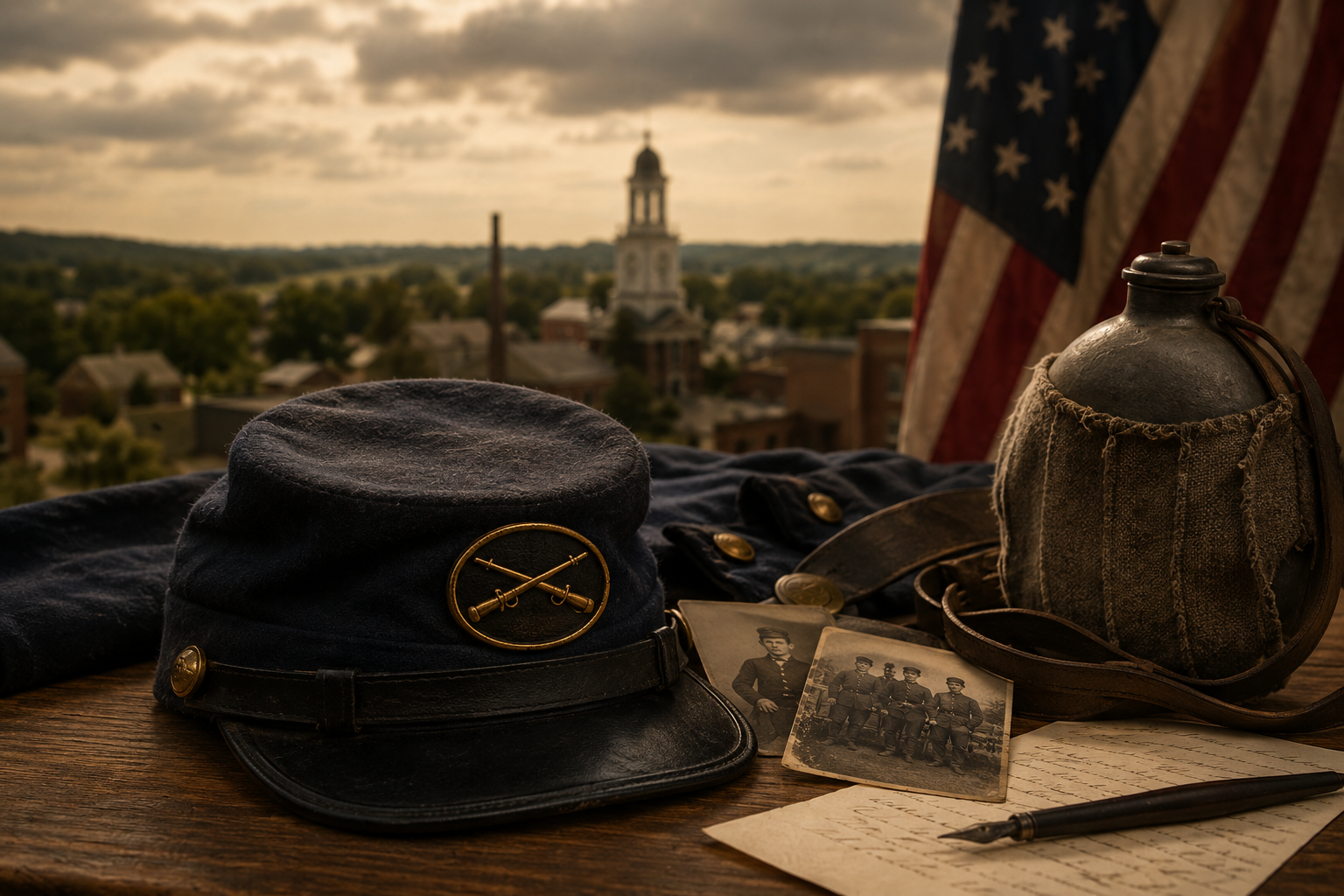
The Civil War may have unfolded across famous battlefields far from southwestern Pennsylvania, but its effects reached deeply into the communities, families, institutions, and daily life of Washington County. Exploring Civil War history Washington County PA gives residents, students, educators, researchers, and local businesses an opportunity to understand how a national crisis became a profoundly local experience.
At the Washington County Historical Society, education connects people with the primary sources, historic places, family stories, and community experiences that make the past meaningful. Learning about local Civil War heritage can enrich the community, support historical preservation, encourage research, and help new generations discover their connection to the people who came before them.
Support Local History with Your Gift!
Let’s dive in…
Key Takeaways
Civil War history Washington County PA becomes more meaningful when national events are connected with local people, records, places, and experiences.
- Local records reveal how Washington County residents experienced the Civil War.
- Primary sources help students develop stronger historical thinking skills.
- Genealogy can uncover connections to soldiers, veterans, and Civil War families.
- Historic places make nineteenth-century Washington County easier to understand.
- Community education keeps important local stories accessible.
- Preservation protects historical resources for future researchers.
- Local history provides context beyond famous battles and national leaders.
- Supporting historical organizations strengthens Washington County’s shared heritage.
Discover Civil War History Washington County PA Through Local Records
Understanding the Civil War locally begins with evidence. Historical records can transform broad accounts of armies, presidents, and battles into stories involving recognizable Washington County families and communities. Researchers may encounter military information alongside newspapers, correspondence, photographs, family materials, government documents, and other archival resources that provide clues about life during the era.
Local research is especially valuable because the war affected far more than soldiers. Families confronted separation and uncertainty, communities responded to wartime news, and residents experienced political, economic, and social changes that continued after the fighting stopped. Studying those experiences helps visitors see Washington County as part of the larger American story rather than as a place disconnected from the conflict.
The Historical Society’s research resources can also help people approach historical questions systematically. Comparing sources, identifying individuals, establishing dates, and examining local context are essential parts of responsible historical research. That process makes Civil War education an investigation rather than simply a collection of facts.
Follow The Stories Of Washington County Soldiers
Thousands of individual experiences make military history personal. Studying Washington County soldiers can reveal where local men served, what units they joined, which campaigns affected them, and how military service shaped their lives after returning home. Even when a soldier’s story is incomplete, surviving records can provide starting points for meaningful research.
Useful avenues for investigating a local soldier can include:
- Military service and enlistment records that establish basic details.
- Pension files that may document veterans and their dependents.
- Census records that place individuals within families and communities.
- Local newspapers containing enlistment news, casualties, letters, or reunions.
- Cemetery records and grave markers that preserve veterans’ identities.
- Family papers, photographs, diaries, and correspondence when available.
These sources become especially powerful when examined together. A name on a roster can lead to a household, occupation, neighborhood, cemetery, or family story. For students and descendants alike, that connection makes the Civil War less abstract and demonstrates how historical research builds a fuller picture from multiple forms of evidence.
Use Primary Sources To Bring History To Life
Primary sources offer one of the strongest tools for Civil War education because they allow learners to examine evidence created by people who lived during or near the period. Letters, newspapers, photographs, public documents, maps, diaries, military records, and artifacts can reveal perspectives that a textbook summary cannot fully capture.
For educators, these materials encourage students to ask productive questions. Who created this source? Why was it created? What does it tell us? What might be missing? How does it compare with other evidence? Those questions strengthen critical thinking and historical literacy while teaching students that interpretations of the past should be grounded in evidence.
Primary sources also introduce the complexity of nineteenth-century life. A newspaper can illuminate public debate, while personal correspondence can show private concerns. A photograph may raise questions about clothing, occupation, status, or memory. When learners investigate these sources together, Civil War history becomes an active educational experience rooted in Washington County’s own historical record.
Connect Local Communities To The National Conflict
Washington County’s distance from famous battlefields did not isolate its residents from the Civil War. National events influenced households, workplaces, political discussions, churches, transportation networks, and community relationships throughout Pennsylvania. Local history helps learners recognize those connections and investigate how a nationwide conflict was experienced at home.
Several themes can help frame that exploration:
- Recruitment connected Washington County communities directly to military service.
- Wartime newspapers carried national developments into local homes and businesses.
- Families faced uncertainty when relatives left for military service.
- Political debates reflected larger questions confronting Pennsylvania and the nation.
- Economic activity changed as communities responded to wartime demands.
- Veterans brought memories and consequences of military service back home.
This local-to-national approach is valuable for education because it provides scale. Students can begin with a person, household, town, or document they recognize and then connect that evidence to larger Civil War themes. The result is a richer understanding of both Washington County heritage and American history.
Research Civil War History Washington County PA Through Genealogy
Genealogy provides a compelling entry point into Civil War history Washington County PA because family research can reveal direct connections between individual lives and national events. A family name, cemetery inscription, old photograph, or story passed between generations may become the first clue in a much larger historical investigation.
Effective genealogical research usually depends on connecting multiple records rather than relying on a single source. Census schedules can establish households and occupations. Military records may identify service. Pension documents can provide information about veterans and family members, while obituaries, newspapers, cemetery records, and local histories can add context. Researchers should also pay attention to spelling variations, changing boundaries, and people with similar names.
The Washington County Historical Society’s research mission helps preserve access to the kinds of local resources that can make these investigations possible. Genealogy is more than building a family tree; it can restore individual experiences to the historical record and demonstrate how national events affected real Washington County families.
Be Part of Preserving History — Contribute Now!
Explore Historic Places With A New Perspective
Historic buildings, streets, cemeteries, churches, communities, and landscapes can become powerful educational resources when viewed through the lens of the Civil War era. Even a site without a battlefield connection may reveal something important about the people, institutions, economy, or built environment of nineteenth-century Washington County.
Visitors can ask what a community looked like during the 1860s, which buildings already existed, how residents traveled and communicated, and where families gathered for religious, commercial, political, or social activities. Cemeteries can reveal veterans, family relationships, commemorative traditions, and demographic patterns. Architecture can help learners imagine the physical environment residents knew.
This place-based approach makes local heritage tangible. It also encourages preservation because people are more likely to value historic resources when they understand the stories associated with them. Educational tours and historical interpretation can turn familiar surroundings into evidence, showing residents that meaningful history exists throughout the places they encounter every day.
Examine How The Home Front Experienced The War
Civil War education should extend beyond military campaigns. The home front provides an essential perspective on how war changed everyday life for people who remained in Washington County. Families managed farms, businesses, households, correspondence, finances, and community responsibilities while coping with news from distant armies and uncertainty about loved ones.
Research into home-front history can explore subjects such as:
- Letters between soldiers and relatives separated by military service.
- Newspaper coverage that shaped local knowledge of wartime events.
- Women’s responsibilities within households and communities during the conflict.
- Businesses and workers responding to changing economic conditions.
- Churches, civic groups, and community networks providing support.
- Public reactions to casualties, military developments, and the war’s conclusion.
These subjects broaden the historical narrative. They demonstrate that wars transform communities as well as battlefields and encourage learners to consider whose experiences have been documented and whose may be harder to recover. Examining the home front gives students a more complete framework for understanding Washington County during one of America’s defining periods.
Learn From The Civil War Era Beyond The Battlefield
A meaningful study of the Civil War requires attention to the difficult questions at the heart of the era. Slavery, emancipation, citizenship, race, political conflict, military service, constitutional authority, and the future of the Union were intertwined with the war and its consequences. Local education can help learners investigate how these national issues were discussed and experienced in Pennsylvania communities.
Historical study is strongest when it recognizes complexity without losing sight of evidence. Newspapers, political materials, public records, personal writings, and later commemorations can reveal differing perspectives and show how attitudes changed—or persisted—over time. Educators can use such sources to distinguish between what people believed in the nineteenth century and how historians analyze those beliefs today.
This broader approach also helps explain why Civil War history remains relevant. Questions about citizenship, memory, political participation, and the meaning of freedom continued long after 1865. Understanding those legacies gives Washington County residents a deeper foundation for interpreting American history.
Preserve The Evidence Future Generations Will Need
Historical education depends on preservation. Researchers cannot study a letter that has been discarded, examine a photograph whose identities were forgotten, or consult a local record that was never protected. Preservation therefore supports both present-day learning and the questions future generations may ask about Washington County.
Individuals and organizations can contribute to preservation in practical ways:
- Record names, dates, locations, and family information connected with photographs.
- Store historic documents in stable conditions away from damaging moisture and light.
- Avoid permanently altering original photographs, letters, and records.
- Digitize appropriate materials while retaining and protecting originals when possible.
- Document family stories while knowledgeable relatives can provide context.
- Consult historical professionals before discarding potentially significant collections.
Preservation is not limited to rare or famous artifacts. Ordinary family documents can contain valuable information about work, migration, military service, relationships, and community life. Supporting institutions that safeguard local history helps ensure that Washington County’s Civil War-era evidence remains available for education and research.
Turn Local History Into Lifelong Learning
Civil War history does not have to end when a school assignment, tour, or research project is complete. One discovery often leads naturally to another: a soldier leads to a regiment, a regiment to a battle, a pension to a family, a family to a neighborhood, and a neighborhood to broader questions about Washington County’s development.
That process is what makes local history such a valuable educational resource. Students can practice evaluating evidence. Families can uncover connections across generations. Teachers can give national history a recognizable local dimension. Businesses and community organizations can support heritage initiatives that strengthen a shared sense of place. Researchers can preserve findings that benefit people they may never meet.
Clay Kilgore and the Washington County Historical Society encourage the community to treat history as an ongoing conversation supported by research, preservation, tours, events, and outreach. When residents participate, local history becomes more than information about the past. It becomes a resource for education, community enrichment, and responsible stewardship.

Frequently Asked Questions
Q: Where can I research Civil War history Washington County PA?
A: The Washington County Historical Society is a valuable starting point for exploring local historical and genealogical resources and learning more about Washington County’s Civil War-era people and communities.
Q: How much does Civil War history research cost?
A: Costs can depend on the type and scope of research or services requested. Contact the Washington County Historical Society for current information about research access, assistance, programs, and any applicable fees.
Q: Is Washington County Historical Society accessible to visitors?
A: Visitors with accessibility needs should contact the Historical Society before visiting to confirm current accommodations, access details, and the best options for participating in educational or research activities.
Q: Can students learn about Civil War history Washington County PA?
A: Yes. Local Civil War history can support lessons in Pennsylvania history, genealogy, primary-source analysis, historical research, citizenship, and broader American history.
Q: Can I research a Civil War ancestor from Washington County?
A: Yes. Start with known names, dates, locations, and family information, then investigate census, military, pension, cemetery, newspaper, and local historical records where available.
Q: What are the benefits of studying local Civil War history?
A: Local study connects major national events with real people and places. It can strengthen historical literacy, critical thinking, family research, community identity, and appreciation for preservation.
Q: How can teachers participate in local history education?
A: Educators can incorporate primary sources, local biographies, historic places, research projects, tours, and Historical Society resources into lessons. Contact the Society to discuss available educational opportunities.
Q: How does donating make an impact?
A: Support for historical organizations helps advance preservation, research, educational programming, outreach, and public access to local heritage, helping important resources remain available for future generations.
Q: Can businesses support Washington County history?
A: Yes. Local businesses can support preservation and education through donations, partnerships, sponsorship opportunities, participation in community programming, and promotion of local heritage.
Civil War history Washington County PA offers far more than names and dates. It provides a way to understand how national events shaped local families, communities, institutions, and generations. For Washington County residents, educators, students, researchers, and businesses, that knowledge strengthens community connections while encouraging thoughtful preservation of the evidence that makes future learning possible.
Ready to be a part of history preservation? Your involvement can help keep Washington County’s stories accessible, meaningful, and useful to future generations. Continue exploring local history, share what you learn, and support the work required to preserve it.