
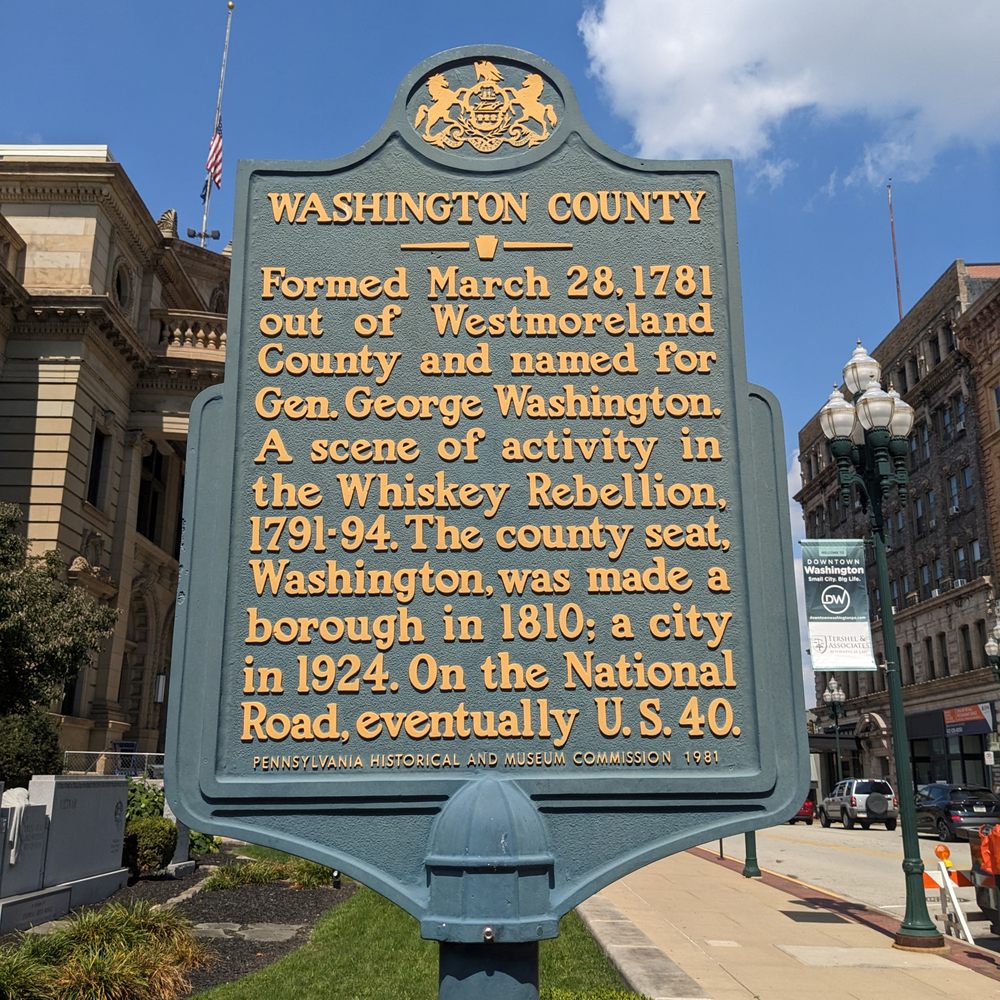
Every street in Washington, Pennsylvania, whispers a piece of history. From the stately architecture of its courthouses to the preserved charm of 18th-century taverns, each landmark tells the story of a community built on resilience, faith, and progress. If you’ve ever walked through downtown and wondered what these walls have seen, this is your invitation to discover the stories behind the Washington PA historic landmarks that make our town unforgettable.
At the Washington County Historical Society, we believe that history lives not only in books but in the buildings, streets, and people who preserve it. Through education and storytelling, we keep these connections alive.
Be part of this legacy — Donate Today!
Let’s dive in…

Key Takeaways
- Washington PA historic landmarks preserve our community’s early American roots.
- Landmarks like the LeMoyne House highlight the fight for freedom and equality.
- Architecture reveals the county’s growth from frontier settlement to industrial center.
- Preservation ensures future generations experience authentic history.
- Every landmark has a unique role in Washington’s cultural fabric.
- Supporting local history helps sustain education and tourism.
- Washington County Historical Society connects people with local heritage.
- You can contribute to preserving Washington’s story today.
Bradford House Museum: A Washington PA Historic Landmarks Must-See
The Bradford House Museum, built in 1788 by David Bradford, stands as one of the earliest symbols of American resistance and civic courage. Bradford, a lawyer and leader during the Whiskey Rebellion, hosted meetings that shaped early federal history within these very walls. This elegant stone home captures both the beauty and turmoil of the late 18th century.
Today, visitors can tour the meticulously restored rooms and learn about frontier life, early American law, and the conflict between citizens and government that tested the young republic. The Bradford House remains a cornerstone for understanding how local stories connect to national change.
Washington County Courthouse
Majestic and timeless, the Washington County Courthouse commands the heart of downtown with its neoclassical architecture and stately dome. Built in 1900, the courthouse reflects the community’s enduring belief in justice and civic pride. Its marble staircases, intricate woodwork, and grand columns reveal a dedication to artistry and democracy.
Beyond its beauty, the courthouse is a living institution — a place where laws are shaped and public life unfolds. It serves as both a working seat of government and a symbol of Washington County’s growth from rural settlement to thriving center of governance.
Frontier School Replica
Step back in time to the one-room Frontier School Replica, a tribute to Washington County’s commitment to education. This modest wooden structure re-creates the conditions under which early frontier children learned — with slate boards, oil lamps, and wood-burning stoves.
Students of all ages visit to experience what schooling was like in the 1800s, reminding us how access to education transformed lives on the frontier. The replica is a beloved stop for families and educators alike, offering hands-on lessons about perseverance, curiosity, and the value of learning.
F. Julius LeMoyne Crematory
The F. Julius LeMoyne Crematory, established in 1876, holds a unique place in American history as the first crematory in the United States. Dr. Francis Julius LeMoyne, known for his advocacy of public health, equality, and reform, built it on his property as part of his vision for scientific progress.
While unconventional in its time, the crematory represented forward-thinking innovation and humanitarian ideals. Visitors today can explore this small but profound landmark and reflect on how one man’s courage to challenge tradition helped redefine American practices of dignity and remembrance.
Pennsylvania Railroad Station
Few landmarks better capture the industrial pulse of Washington County than the Pennsylvania Railroad Station. Once a bustling hub of commerce and travel, the station connected Washington to Pittsburgh and beyond, carrying goods, people, and ideas that shaped the region’s prosperity.
Its red brick walls and arched windows still tell stories of migration, ambition, and change. Though trains no longer run daily, the building remains a proud emblem of the city’s industrial legacy — a reminder that Washington’s growth was fueled by motion, innovation, and connection.
Support local history with your gift — Contribute Now!
Why Washington PA Historic Landmarks Landmarks Matter, and How You Can Get Involved
Each of these historic landmarks embodies a chapter of Washington’s story — from revolution and reform to education and industry. Together, they shape our community identity and remind us of the values that continue to guide us: courage, learning, and progress.
Preserving these places ensures that future generations can see, touch, and experience the moments that made Washington what it is today. The Washington County Historical Society leads these preservation efforts, offering tours, educational programs, and volunteer opportunities for all ages.
Here’s how you can play a part:
- Join guided tours or attend storytelling events to learn more about our shared heritage.
- Volunteer with restoration or community outreach projects.
- Donate to preservation initiatives and historical education programs.
- Share your family’s Washington County stories to enrich our archives.
Be part of preserving history — Support Local History Today!

FAQ: Washington PA Historic Landmarks
Q: What is the most famous Washington PA historic landmark?
A: The LeMoyne House, known for its role in the Underground Railroad, is the most celebrated landmark in Washington, PA.
Q: Can I tour Washington PA historic landmarks?
A: Yes! Many sites, including the LeMoyne House and Bradford House Museum, offer guided tours through the Washington County Historical Society.
Q: Are Washington PA historic landmarks family-friendly?
A: Absolutely. Many tours are designed for all ages, offering engaging, educational experiences for children and adults alike.
Q: How can I support local landmark preservation?
A: You can volunteer, donate, or attend events hosted by the Washington County Historical Society to help protect our shared heritage.
Q: What makes Washington PA historic landmarks unique?
A: Their deep connection to early American history, abolitionism, and industry gives Washington’s landmarks rare historical diversity.
Q: Are these landmarks accessible to the public year-round?
A: Most are open seasonally or by appointment. Check wchspa.org for hours and event updates.
Q: Why does preserving Washington’s landmarks matter?
A: Preservation keeps our local stories alive, educates future generations, and strengthens community identity.
Washington’s landmarks are more than historic sites; they are storytellers. Each brick, beam, and document speaks of courage, creativity, and progress. As the Washington County Historical Society continues to protect and share these legacies, your support ensures that history remains a living, breathing part of our everyday world.
Ready to be a part of history preservation? Donate Here!